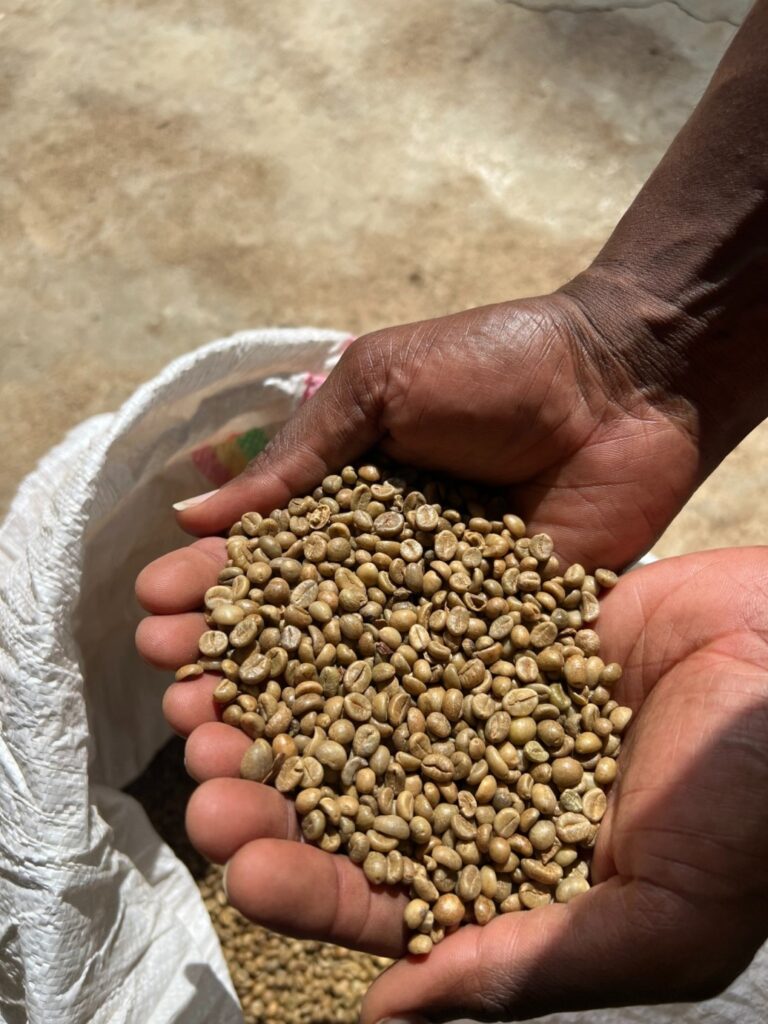
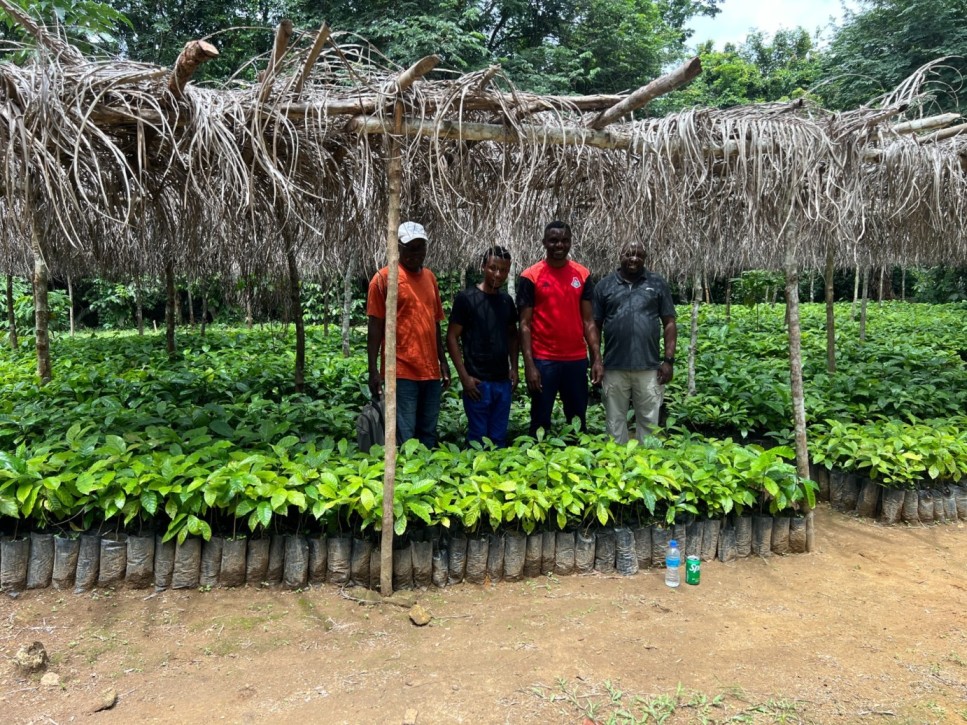
We cultivate, process, and export premium green coffee beans — including Coffea stenophylla, Sierra Leone's near-extinct Highland Coffee — to roasters and importers worldwide.
Last recorded in the wild in 1954, Coffea stenophylla was rediscovered in 2018 by Royal Botanic Gardens, Kew researchers — in the Kambui Hills, near Kenema. We are one of the very few farms cultivating it commercially and offering it for green bean export.
Sierra Leone's Highland Coffee. Rediscovered near Kenema in 2018. Arabica-like flavour with natural heat resilience. Scored 80.25 by the Specialty Coffee Association in blind tasting. Available in limited quantities to specialty roasters and importers.
Full details →Our primary commercial variety. High-yield, disease-resistant, and well-adapted to the Eastern Province climate. Full-bodied with low acidity — suited to espresso blends and commercial roasters requiring reliable, traceable green bean supply.
Full details →One of the world's rarest commercial coffee species. Bold, smoky, and distinctively complex. Grown in small quantities on our Kenema farm — a compelling option for specialty buyers seeking something genuinely beyond arabica and robusta.
Full details →We supply unroasted green beans to specialty roasters, commodity importers, and research institutions. Reach out to discuss varieties, volumes, and sample availability.
© 2026 Leo Universal Plantation (SL) Ltd · All rights reserved
Leo Universal Plantation is Sierra Leone's largest coffee plantation — established in Tunkia Chiefdom, Kenema District, with a singular purpose: to create sustainable agricultural employment in one of West Africa's most overlooked regions, and to bring the world some of its rarest and most extraordinary green coffee.
We are rooted in Tunkia Chiefdom, Kenema District, Eastern Province — a region that borders both Guinea and Liberia, and one that bore some of the heaviest losses during Sierra Leone's Ebola outbreak and prior years of civil conflict. Full chiefdom quarantines and severe movement restrictions brought entire farming communities to a standstill. Coffee farms that had once sustained families for generations were left unattended and lost.
Leo Universal Plantation was established in 2015 with a deliberate focus on rehabilitation. In the immediate aftermath of those crises, our founder Stephen Makinwa acquired more than 1,500 acres of land in Belebu and surrounding villages in Tunkia Chiefdom, beginning active cultivation on over 690 acres. The goal was unambiguous: restore coffee farming as a viable livelihood, create permanent employment for smallholder communities across Kenema, Kailahun, and Kono districts, and build a traceable supply chain connecting Sierra Leone's exceptional coffee to global export markets.
Today we are recognised as Sierra Leone's largest coffee plantation. We cultivate, process, and export green coffee beans — giving the roasters and importers we work with complete control over the final cup. Our relationship with the Sierra Leone Produce Monitoring Board (PMB) provides institutional support and ongoing technical collaboration.
"For fourteen years I wore the blue of Lazio and the green of Nigeria. Today I plant a different kind of legacy — one measured not in goals, but in the lives and land we restore."
Stephen Ayodele Makinwa · SS Lazio & Super Eagles · Founder, Leo Universal PlantationBorn in Lagos, Nigeria in 1983, Stephen Makinwa's name — Ayodele — means "joy has come home." Discovered by Italian club Reggiana in 2000 while playing for local side Ebedei alongside childhood friend Obafemi Martins, he began a professional career that would take him across Italian football for 14 years, including six seasons at SS Lazio in Rome, where he played in the UEFA Champions League and represented the Nigerian Super Eagles at two Africa Cup of Nations tournaments.
At Palermo in 2005, he was signed for a reported €7.5 million. At Lazio from 2006, he became part of one of Italy's most storied clubs — based at the Stadio Olimpico in Rome, a city he continues to call home. It was this long association with Rome's coffee culture, and his connection to Sierra Leone's people and land, that shaped what came next.
After retiring from professional football, Stephen chose to invest not in the expected, but in the overlooked. In 2015, he established Leo Universal Plantation in Kenema District — a region he believed had extraordinary agricultural potential and a community that most needed the kind of sustained, dignified employment that farming can provide. Seven years later, with 160 workers employed — 90% on monthly salaries with national insurance contributions paid — the plantation stands as one of the most significant private agricultural investments in Sierra Leone's Eastern Province.
He is also a licensed football agent, football analyst, and heads the Makoz Group — but this plantation remains his most personal project: a commitment to Sierra Leone that will outlast sport.
Reggiana, Como, Genoa, Atalanta. Established as a powerful Serie A forward alongside Diego Milito at Genoa.
5 goals in 23 Serie A matches; Palermo qualified for Europe. 3 goals in the UEFA Cup.
Six seasons at the Stadio Olimpico. UEFA Champions League. Nigerian Super Eagles, 14 international caps.
Represented Nigeria at two AfCON tournaments. Nigeria finished third in 2006.
Acquires land in Tunkia Chiefdom, Kenema District. Cultivation begins on 690+ acres in 2016.
Leading cultivation, processing, and export operations. 160 permanent employees across Kenema, Kailahun, and Kono districts. Based in Rome.
Every batch we cultivate, process, and export is held to standards we would stake our reputation on. We would sooner supply less than compromise the integrity of what reaches the roaster.
160 employees. 90% on permanent monthly salaries. National insurance contributions paid. The welfare of the people working our land is not a marketing point — it is the measure of our success.
We are honest about what we do and what we don't. We cultivate and export green beans. We do not roast. Every buyer knows exactly what they are receiving, where it came from, and who grew it.
Cultivating Coffea stenophylla — a species on the IUCN Red List of Threatened Species — is a scientific and agricultural responsibility. We take that seriously, for the specialty coffee world and for future generations.
Vision — To be West Africa's most respected green coffee exporter: recognised for rare varieties, full traceability, and the enduring economic impact we create in rural Sierra Leone.
Mission — To cultivate, process, and export the highest-quality green coffee beans from Sierra Leone — restoring the country's coffee heritage, creating lasting employment in its most vulnerable communities, and bringing the world's rarest varieties to those willing to champion them.
© 2026 Leo Universal Plantation (SL) Ltd
All grown organically in Tunkia Chiefdom, Kenema District, Eastern Province. All exported as green (unroasted) beans — giving roasters complete control over the cup they create.
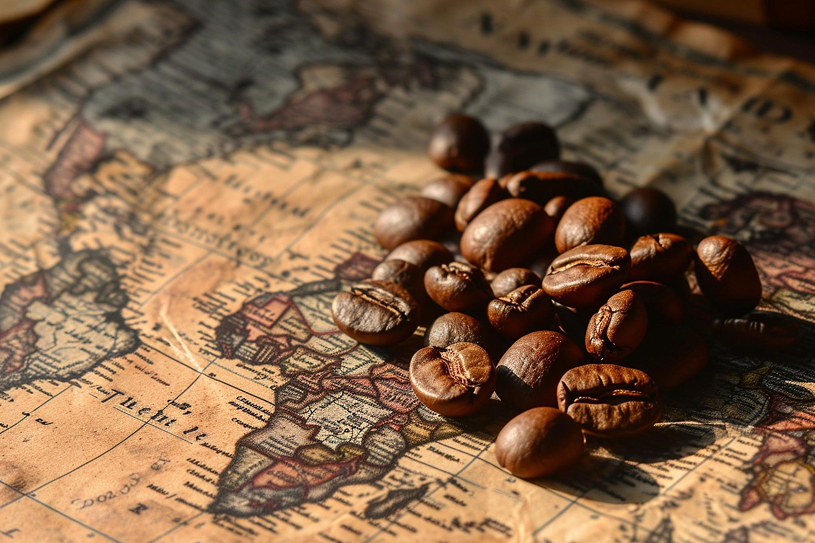
Coffea stenophylla was once cultivated across Upper West Africa and exported to Europe as a premium commodity. After robusta's commercial rise in the early twentieth century, it was progressively abandoned. By 1954, the last recorded wild plant in Sierra Leone was gone. For 64 years, it was considered functionally extinct.
In December 2018, botanist Dr Aaron Davis from the Royal Botanic Gardens, Kew, and Professor Jeremy Haggar from the University of Greenwich, travelled to Sierra Leone specifically to find it. They rediscovered it in two locations: a single surviving plant in the Kasewe Hills, and a small population in the Kambui Hills — near Kenema, the same district where our plantation operates.
"Its flavour was found to be excellent, and equal to the finest arabica."
— J.H. Hart, Royal Botanic Gardens Trinidad, 1898 — confirmed by professional tasting panel, 2021Leo Universal Plantation has established demonstration farms for Stenophylla and is among the very few operations in the world making it available as commercial green bean export. We work with the Sierra Leone Produce Monitoring Board and are in active collaboration with the country's agricultural research community. Availability is strictly limited — contact us to discuss allocation.
In April 2021, a landmark paper published in Nature Plants by Dr Aaron Davis (RBG Kew), Dr Delphine Mieulet (CIRAD), Professor Jeremy Haggar (University of Greenwich), and Sierra Leonean co-authors formally confirmed what the 1898 tasters already knew. A professional panel including tasters from Nespresso and Jacobs Douwe Egbert evaluated Stenophylla blind alongside high-quality Arabica and Robusta samples.
Our primary commercial export variety. High-yielding, disease-resistant, and naturally suited to the climate and altitude of Tunkia Chiefdom. The cup is strong and full-bodied with low acidity and excellent body — a natural fit for espresso blends and commodity roasters looking for a consistent, traceable West African green bean. Available in larger volumes with reliable lead times.
One of the world's least commercially cultivated coffee species — and one of its most distinctive. Liberica's large cherries and unusual flavour profile (bold, woody, smoky, with a full and sometimes floral finish) make it a rare find for specialty roasters seeking something genuinely outside the arabica and robusta duopoly. We grow it in small quantities on our Kenema farm. Enquire early — availability is seasonal.
All three varieties are available for green bean export. Contact us to discuss allocation, minimum order quantities, and shipping terms.
© 2026 Leo Universal Plantation (SL) Ltd
We manage the complete journey — cultivation, harvesting, on-site processing, and export preparation — entirely on our farm in Belebu, Kenema District. What leaves our farm is a premium green bean.
Leo Universal Plantation supplies green coffee beans. We are cultivators, processors, and exporters. Our responsibility is to deliver exceptional raw material with clear origin. Your responsibility is to make it extraordinary.
Our three coffee varieties — Coffea stenophylla, Robusta, and Liberica — are grown organically across 690+ acres in Belubu, Tunkia Chiefdom, Kenema District. The Eastern Province's climate, rainfall pattern, and forest canopy provide conditions that support the kind of slow cherry development that produces flavour complexity in the green bean.
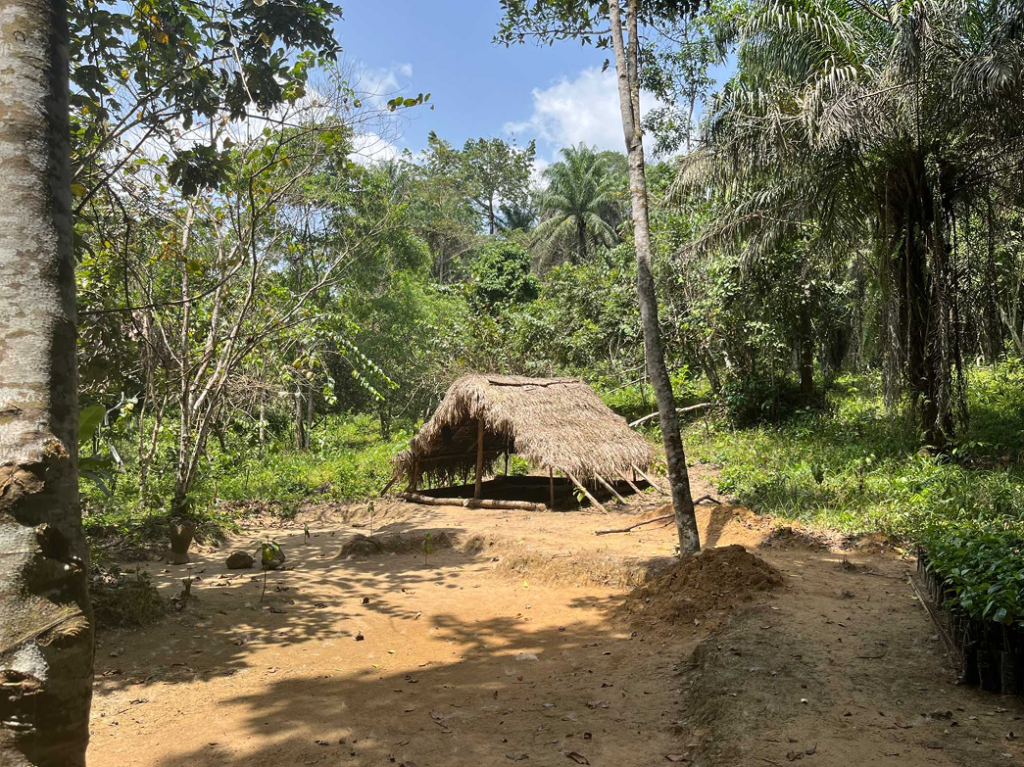
No synthetic fertilisers or pesticides are used on any part of the farm. For Stenophylla in particular, shade cultivation is maintained to replicate the species' natural forest environment — a requirement for both quality and responsible stewardship of a vulnerable species.
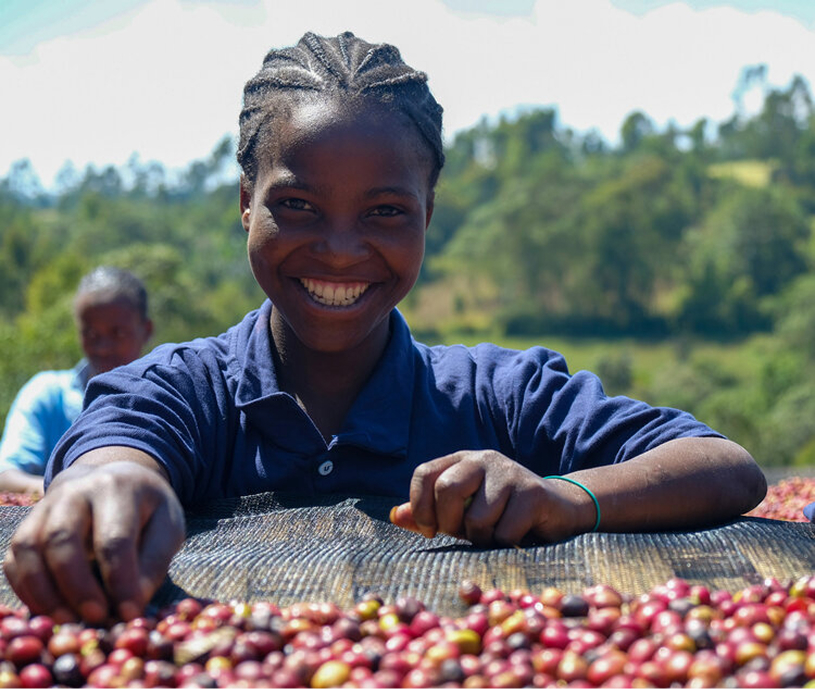
Coffee cherries are hand-picked at peak ripeness by our permanent workforce — 160 employees drawn entirely from local communities in Kenema, district. Selective picking means only fully ripe cherries are removed in each pass, with immature fruit left on the tree to develop. Multiple passes are made through the harvest season as cherries reach ripeness at different rates.
This labour-intensive approach — the same method used by the world's leading specialty origins — is one of the most significant contributors to the cleanliness and consistency of our green bean lots, and is particularly important for our limited Stenophylla and Liberica harvests.
Cherries are processed on the farm within hours of picking to prevent premature fermentation. We employ natural (dry) processing method.
Natural lots are laid as whole cherries on raised beds and turned regularly to ensure even drying and prevent mould. The methods is conducted under the supervision of our farm management team.
Green beans are dried on raised beds to a target moisture content of 10–12%, with regular turning and shade protection during peak sun hours to prevent case-hardening. Parchment is removed by milling once the target moisture is reached.
Beans are then sorted by size and density. Defective beans — over-fermented, insect-damaged, or visually compromised — are removed by hand during the final sorting stage. Lot records are maintained throughout.
Finished green beans are graded, weighed, and packed into GrainPro-lined jute export bags for moisture protection during shipping. All export documentation is prepared in accordance with Sierra Leone export regulations and international buyer requirements.
We work directly with roasters, green coffee importers, and research institutions. Minimum order quantities, delivery terms, and lead times are confirmed during the enquiry process. We welcome sample requests for all three varieties prior to commitment.
© 2026 Leo Universal Plantation (SL) Ltd
Leo Universal Plantation was established in the aftermath of Ebola and civil conflict — in a region that needed long-term investment, not charity. Our sustainability is not a pledge. It is the reason we exist.
Farmed without synthetic inputs across Tunkia Chiefdom, preserving the forest ecosystem of Eastern Province that supports Stenophylla's natural habitat.
90% on monthly salary contracts. National insurance contributions (NASSIT) paid at the end of every month. Employment extended across Kenema, Kailahun, and Kono districts.
We are among the first farms cultivating this IUCN Vulnerable species commercially — preserving it in cultivation while it remains critically threatened in the wild.
Kenema District was among the hardest-hit regions during Sierra Leone's 2014–2016 Ebola outbreak — the worst in the disease's history. The district, which borders both Guinea and Liberia, became one of the epicentres of the epidemic, with full chiefdom quarantines halting movement, trade, and farming. Coffee farms that had provided generational livelihoods were abandoned. Communities that had been fragile before the outbreak were devastated by it.
Prior to Ebola, the region had already lost its agricultural momentum to over a decade of civil conflict. Coffee — once one of Sierra Leone's most important cash crops, sustaining rural economies across the Eastern Province — had been progressively abandoned as farmers fled and infrastructure collapsed. By the time peace returned, the knowledge, infrastructure, and economic confidence required to restart production had been lost alongside the farms themselves.
Our founder Stephen Makinwa chose to invest in Tunkia Chiefdom not despite these difficulties, but because of the opportunity they represented — to restore something genuinely valuable, and to do so in a way that created structural, long-term benefit for the people who remained.
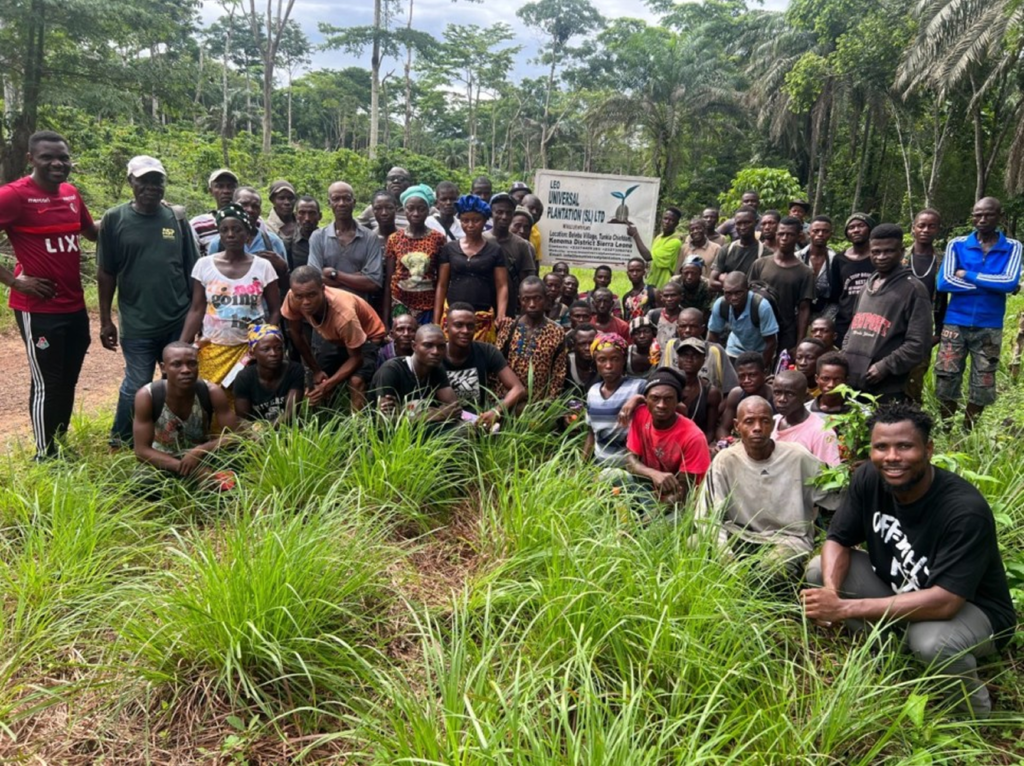
Over seven years of sustained investment, we have cultivated 690+ acres, employed 160 workers from local communities, distributed food items, football equipment, and educational materials to surrounding villages, and established demonstration farms for one of the world's rarest coffee species — all in a region that the world had largely passed over.
160 employees across our Kenema operations, creating the kind of income stability that allows families to plan their lives. Workers are drawn from communities in Kenema, Kailahun, and Kono districts.
No synthetic fertilisers or pesticides are used anywhere on the farm. Shade-growing practices, central to our Stenophylla cultivation, maintain the forest canopy that supports biodiversity across the Eastern Province. We are pursuing formal organic certification and will publish the outcome when complete.
Coffea stenophylla is classified as Vulnerable on the IUCN Red List of Threatened Species, with only a handful of wild plants confirmed to survive in Sierra Leone's forests. By maintaining demonstration farms and working towards commercial export production, we are creating an agricultural future for this species beyond its threatened wild populations — in partnership with the Sierra Leone Produce Monitoring Board, Wealthungerhilfe (WHH), Greenwich University, and Sierra Leone Agricultural Research Institue (SLARI).
Our commitment to the communities surrounding our plantation extends beyond employment. Over the years we have distributed food items to local families, provided football kits to community teams, and supplied learning materials to schools in the chiefdom. We believe that a business operating in a community has an obligation to that community — and we intend to honour it.
© 2026 Leo Universal Plantation (SL) Ltd
A visual record of our cultivation, our community, and the landscape of Eastern Province Sierra Leone — home to some of the world's rarest coffee.
High-resolution images available for press, research, and trade use on request — contact us here. Researchers, journalists, and documentary filmmakers covering Coffea stenophylla or Sierra Leone's coffee revival are welcome to reach out about farm visits.
© 2026 Leo Universal Plantation (SL) Ltd
We supply unroasted green beans to specialty roasters, green coffee importers, and research institutions. Tell us about your needs — variety, volume, destination — and we will respond within two business days.
Please note: We are a green bean export operation. All enquiries are for B2B green bean export. Minimum quantities and shipping terms are confirmed individually.
Thank you — your export enquiry has been sent to Leo Universal Plantation.
We aim to respond within 2 business days.
For urgent matters call +232-744-09393.
© 2026 Leo Universal Plantation (SL) Ltd